TB VTP - GNS3 Lab: VLAN Trunking Protocol (VTP) with GNS3Vault
by C. Casquatch
In this blog, I walk through the lab step-by-step and include screenshots to document my process and learning.
This week I tackled VLAN Trunking Protocol (VTP) using Rene Molenaar’s GNS3 Vault lab. VTP helps reduce the administrative overhead of managing VLANs across multiple switches—perfect for anyone studying for their CCNA or just diving deeper into Layer 2 networking.
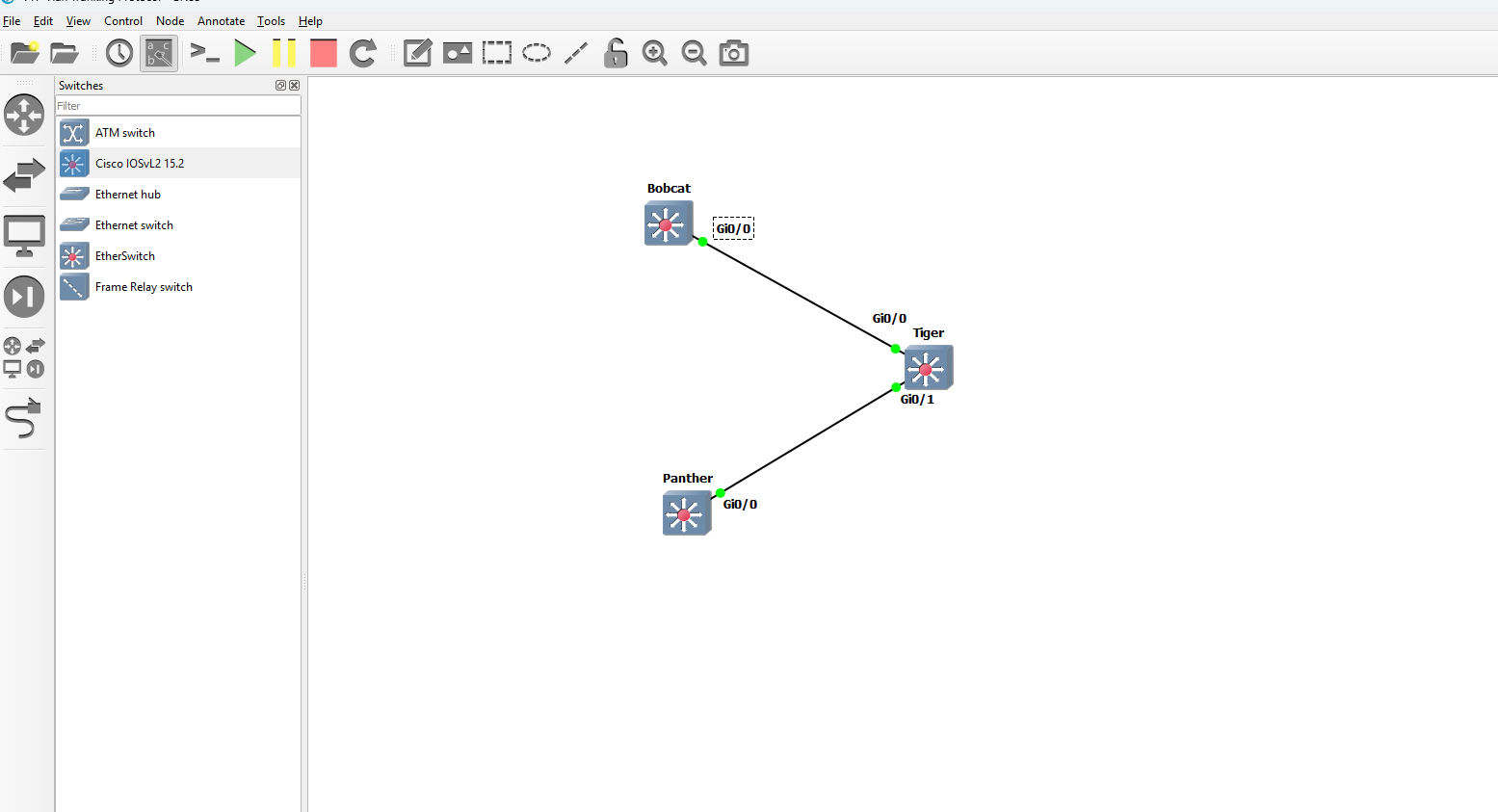
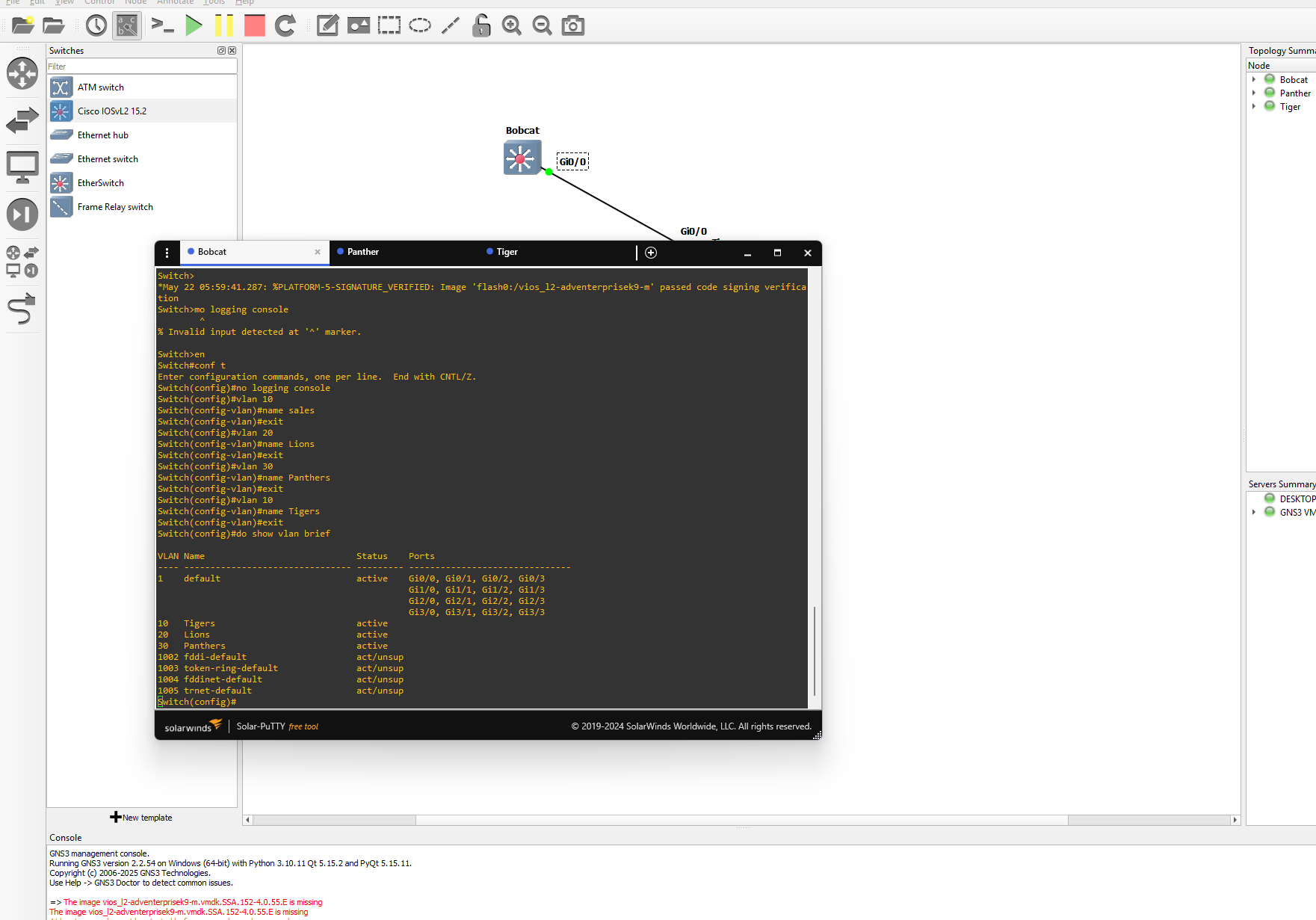
🛠️ Step 1: Create VLANs on Bobcat
Instruction:
Create the following VLANs on switch Bobcat:
VLAN 10: name Tigers
VLAN 20: name Lions
VLAN 30: name Panthers
All VLANs created successfully!
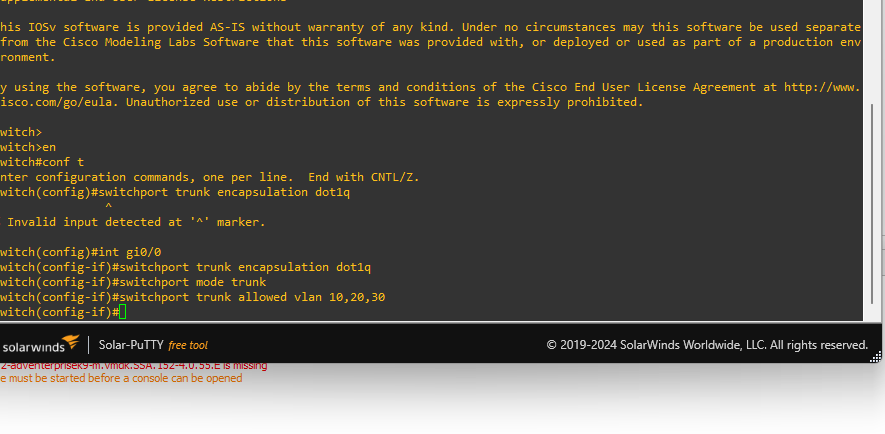
🔌 Step 2: Configure Trunk Ports
Instruction:
Configure the interfaces between the switches as trunks:
Gi0/0 on Bobcat, Gi0/0 and Gi0/1 on Tiger, and Gi0/0 on Panther.
Commands used:
switchport trunk encapsulation dot1q
switchport mode trunk
switchport trunk allowed vlan 10,20,30
✅ Trunking interfaces configured and active.
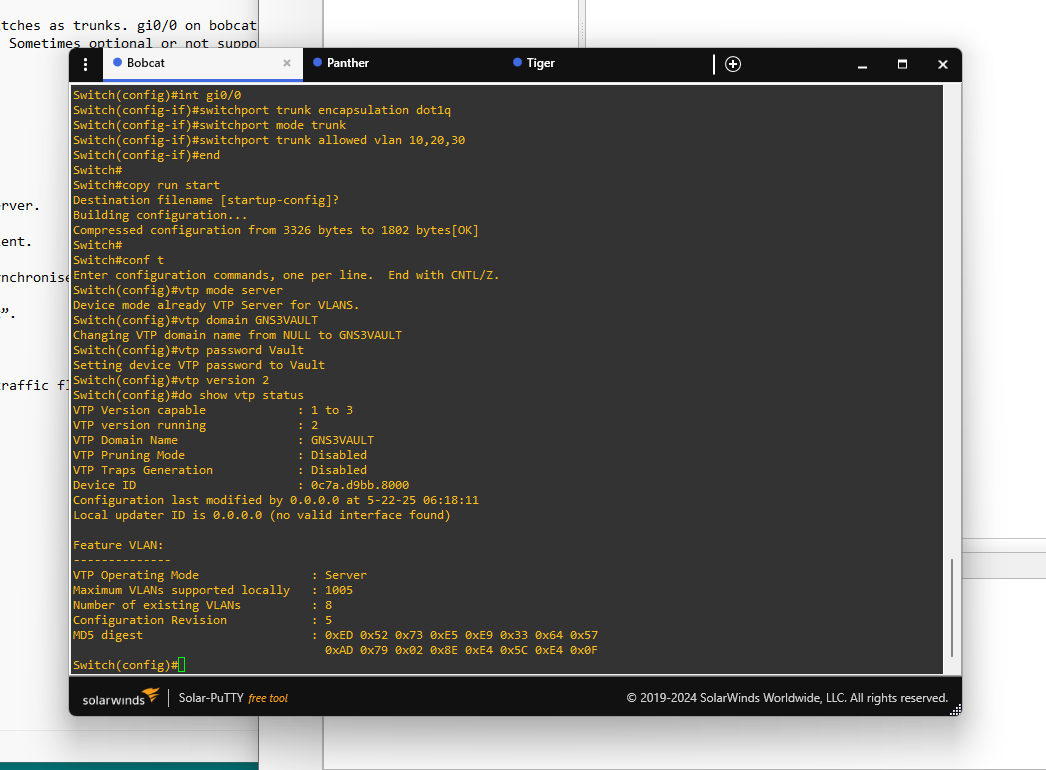
💾 Don’t forget to save:
copy run start
🧠 Step 3: Configure Bobcat as VTP Server
Set the VTP domain, version, password, and mode:
vtp domain GNS3Vault
vtp mode server
vtp version 2
vtp password Vault
📌 This makes Bobcat the central VLAN manager.
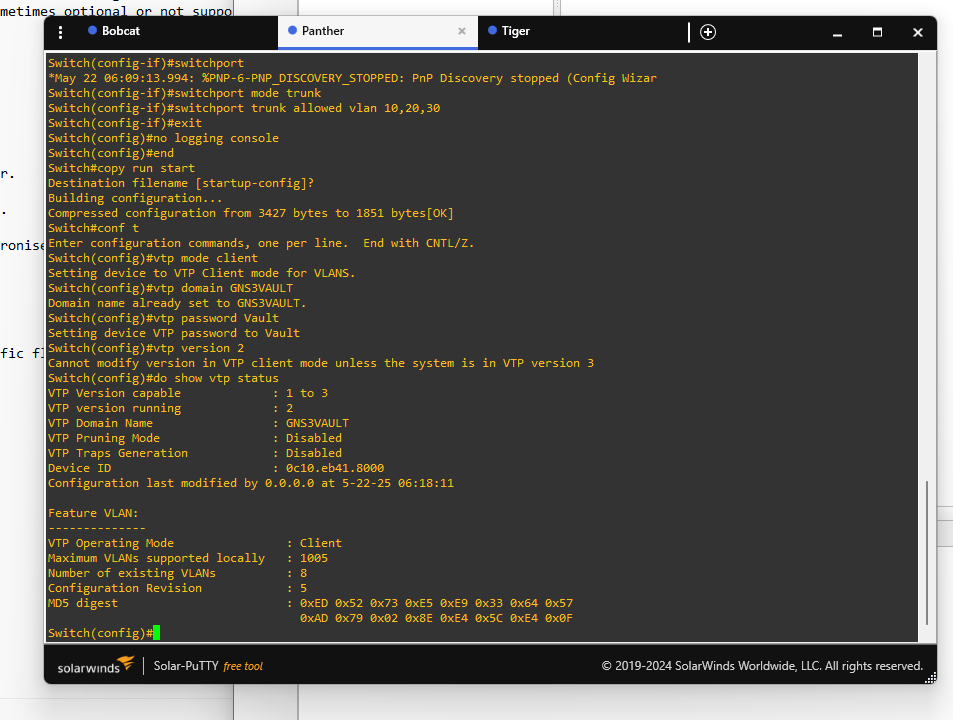
🖥️ Step 4: Configure Panther as VTP Client
Now Panther can receive VLAN updates from the server.
vtp domain GNS3Vault
vtp mode client
vtp version 2
vtp password Vault
🛰️ Synced and ready to go.
🧙 Step 5: Configure Tiger as VTP Transparent
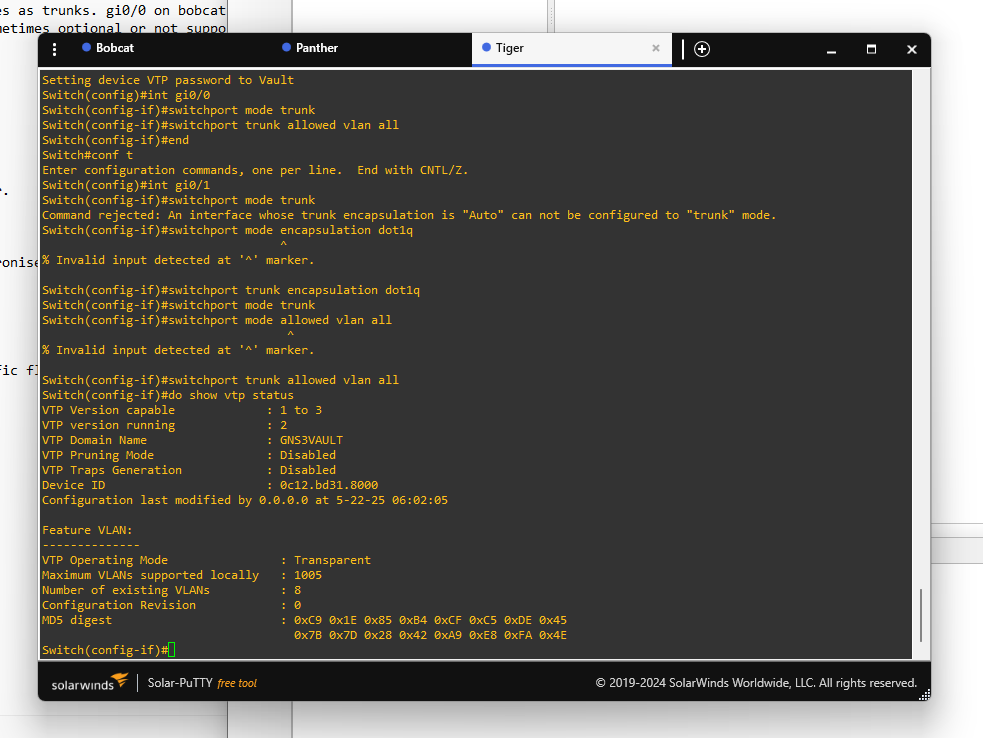
Tiger won’t sync to the latest VLAN info but will forward VTP advertisements. Useful when a switch needs to bridge VTP info between other switches but not be part of the sync.
vtp domain GNS3Vault
vtp mode transparent
vtp version 2
vtp password Vault
Trunk Interface Configs:
interface gi0/0
 switchport mode trunk
 switchport trunk allowed vlan all

interface gi0/1
 switchport mode trunk
 switchport trunk allowed vlan all
🚫 Step 6: Reduce Unnecessary VLAN Traffic (VTP Pruning)
Instruction:
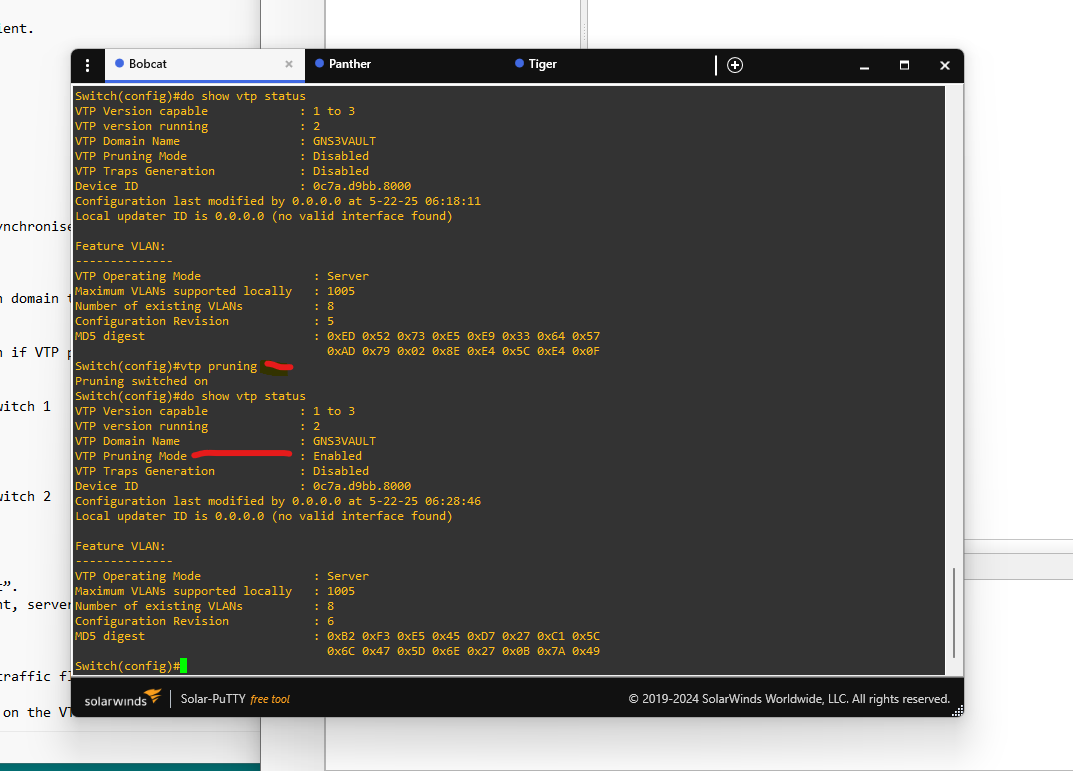
Enable VTP pruning to prevent broadcast/multicast traffic from going where it’s not needed.
On Bobcat (the VTP server):
vtp pruning
This helps improve network performance by preventing VLAN traffic from being flooded unnecessarily across trunk links.
🧾 Final Thoughts
This was a great exercise in:
- Practicing VLAN creation and trunk configuration
- Understanding VTP server/client/transparent roles
- Learning how VTP pruning optimizes trunk link usage
Working through this lab gave me a clearer picture of how VLANs are managed in networks. Huge thanks to Rene Molenaar for the awesome lab!
Up next? Maybe Dynamic Trunking Protocol (DTP) or some STP madness.
tags: GNS3 - vtp - Networking - trunking